Educational Board Games for Kids: 9 Teacher Picks for Family Game Night
Educational board games for kids ages 4–12, picked by a teacher: coding, math, reading and logic games your family will actually ask to play.
Disclosure: As an Amazon Associate I earn from qualifying purchases. This post contains affiliate links; if you buy through them, I may earn a small commission at no extra cost to you. Details.
 Save to Pinterest
Right now, game night at your house might look like one kid on a tablet, one kid refusing to play because they lost last time, and a box of Candy Land nobody has opened since spring. Picture a Friday when the kids pull out a game themselves, add up their own scores and argue about strategy instead of about whose turn it is. Educational board games for kids can get you there, as long as the learning is built into the play. This list has nine games I trust, sorted by age, each with the skill it builds and a tip for getting more out of it.
Some links below are affiliate links. If you buy through them, Teacher’s Nook may earn a small commission at no extra cost to you.
How I pick a game that teaches
A good learning game passes three tests. Kids want a second round. The skill is part of every turn, so nobody has to stop and “do the math part.” And an adult can play without being bored, because game night falls apart when the grown-ups are checking their phones.
Age labels on the box are a starting point. A patient 6-year-old with an older sibling can often handle a game rated 8+, and a tired 9-year-old may want something simpler on a school night.
Quick comparison
| Game | Box age | Players | Main skill |
|---|---|---|---|
| Robot Turtles | 4+ | 2–5 | Coding logic, sequencing |
| Outfoxed! | 5+ | 2–4 | Deduction, teamwork |
| Rory’s Story Cubes | 6+ | 1+ | Storytelling, vocabulary |
| Qwirkle | 6+ | 2–4 | Patterns, planning |
| Blokus | 7+ | 2–4 | Spatial reasoning, strategy |
| Sleeping Queens | 8+ | 2–5 | Addition, memory |
| Rush Hour | 8+ | 1 | Logic, planning ahead |
| Gravity Maze | 8+ | 1 | Spatial reasoning |
Box ages and player counts are taken from the makers’ and retailers’ listings.
Games for ages 4 to 6
1. Robot Turtles
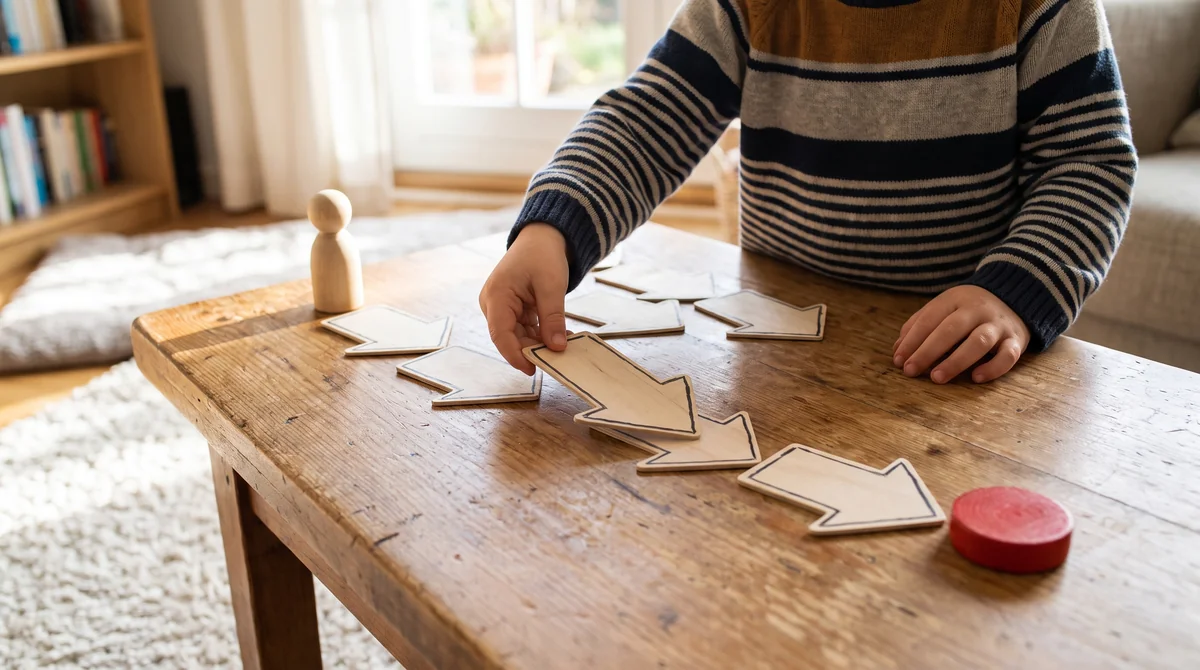
Skill: coding logic, sequencing, debugging
Kids play Code Cards to move their turtle toward a jewel, and an adult (the “Turtle Mover”) follows the cards exactly, beeps included. When a card sends the turtle the wrong way, kids use a Bug Card to undo it. That is debugging, and preschoolers figure it out quickly. Nobody loses, because everyone plays until their turtle reaches its jewel. Older kids can move on to the “Write Program” mode, where they plan several moves at once.
Teacher tip: Let your child be the Turtle Mover for a younger sibling once they know the game. Explaining the rules to someone else is a big step up in understanding.
2. Outfoxed!
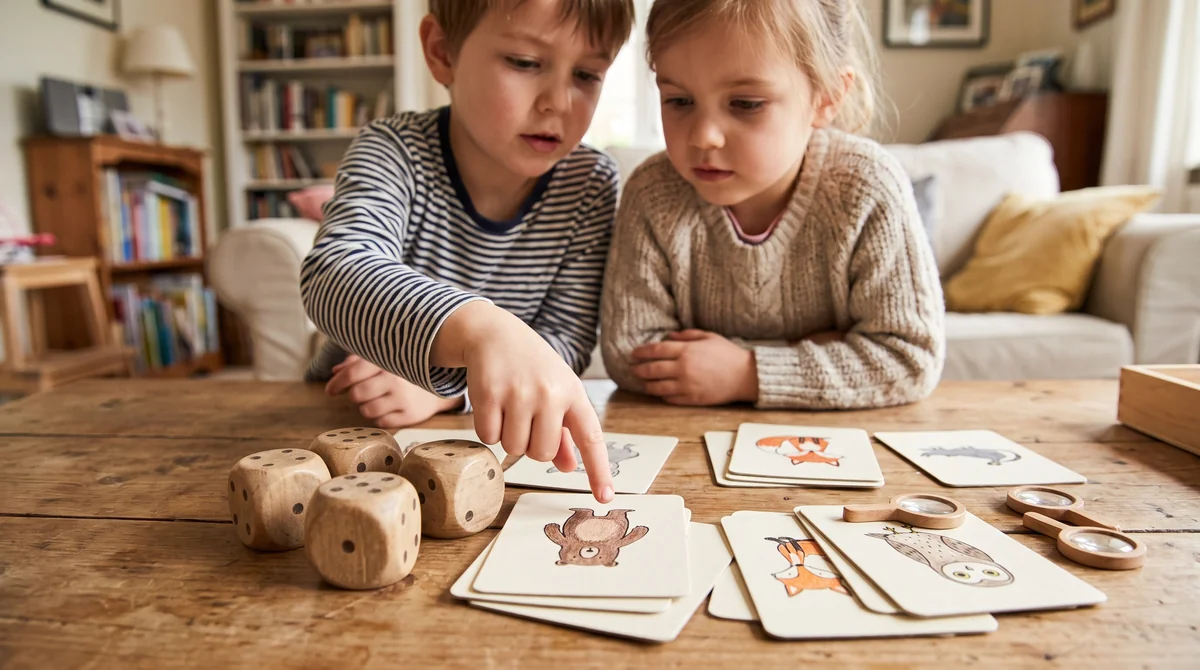
Skill: deduction, paying attention to details, cooperation
This is a whodunit with chickens. Players work together, move around the board, collect clues and use a little decoder to rule out fox suspects before the guilty fox escapes. Because it is cooperative, it works well for kids who melt down when they lose. Everyone wins or loses as a team.
Teacher tip: Ask “How do you know it’s not that fox?” each time a suspect gets flipped. Saying the reason out loud is the reasoning skill.
Search for Outfoxed! on Amazon
3. Rory’s Story Cubes
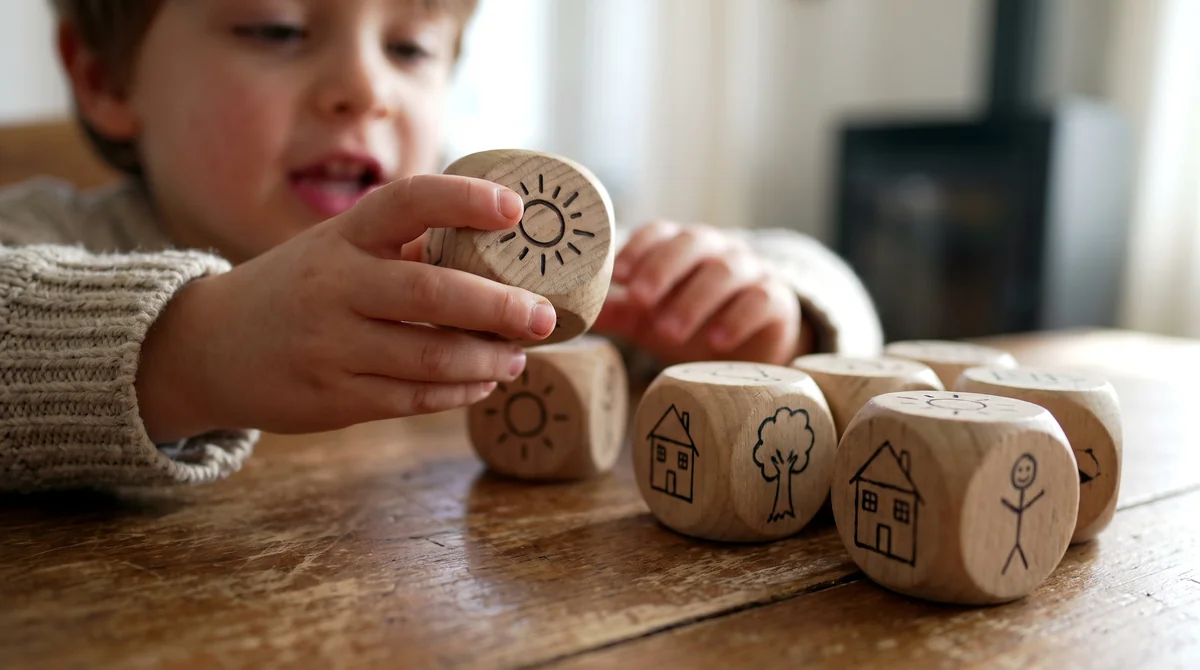
Skill: storytelling, oral language, vocabulary
Nine dice with a picture on every face, packed in a small tin. Roll them, then tell a story that uses all nine images. Younger kids can use three dice and tell a “beginning, middle, end” story. There are no points, so it works at a restaurant table as well as at home.
Teacher tip: Write down one of your child’s stories word for word. Reading their own story back to them is an old early-reading trick.
Check Rory’s Story Cubes on Amazon
Games for ages 6 to 8
4. Qwirkle
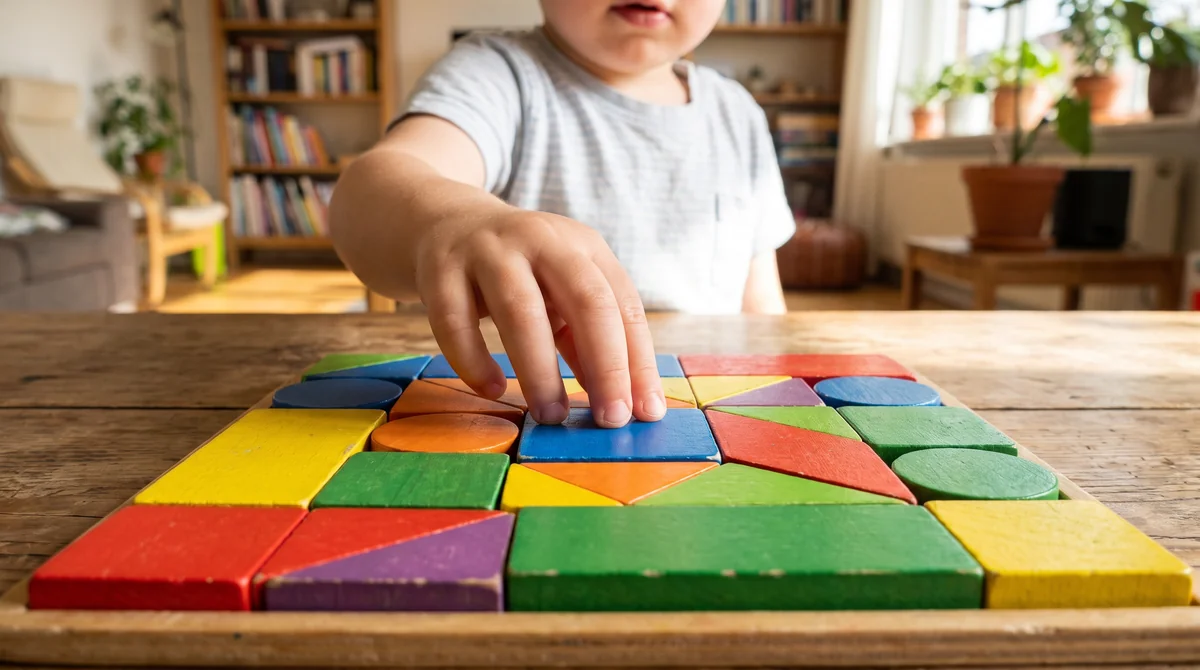
Skill: matching patterns, planning, adding up scores
Qwirkle comes with 108 chunky wooden tiles in six shapes and six colors. On each turn you build lines that share a color or a shape, with no repeats. It feels a bit like dominoes, and the scoring gives kids steady practice adding small numbers.
Teacher tip: Give your child the score pad. Keeping score for the whole table is more addition practice than most worksheets, and kids take the job seriously.
5. Blokus
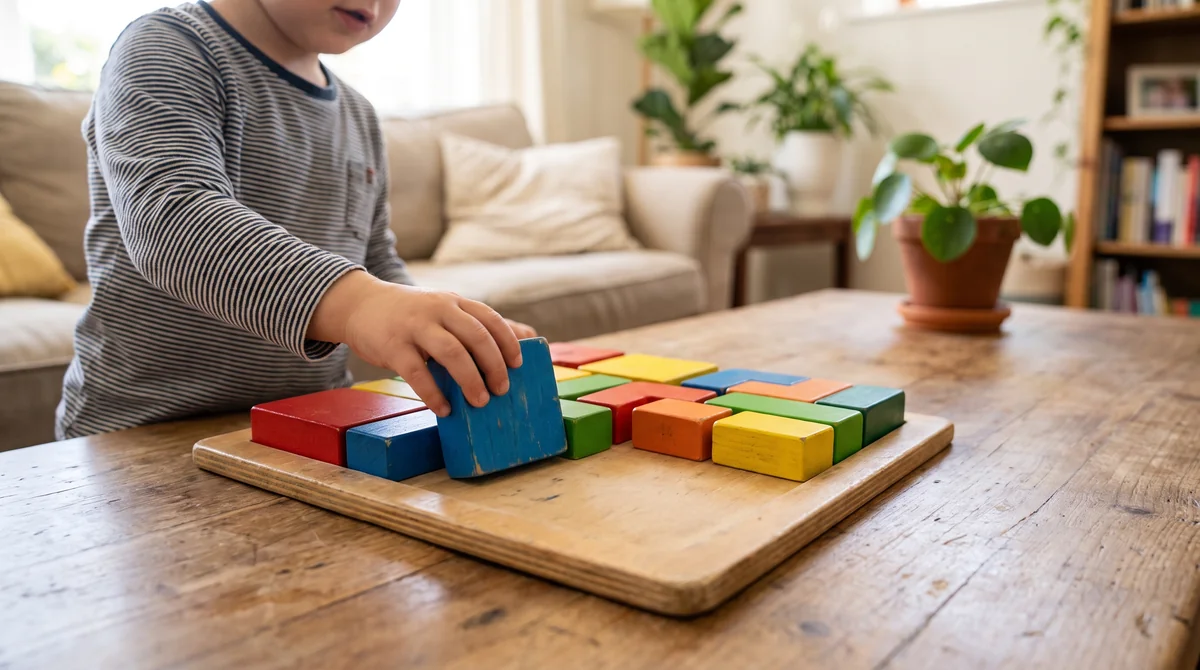
Skill: spatial reasoning, strategy, flexible thinking
Each player gets 21 colored pieces shaped like Tetris blocks. The one rule: your new piece has to touch one of your own pieces, but only at a corner. Kids learn the rule in a minute, then spend the game turning pieces in their hands to see where they might fit. It is quiet and visual, which suits kids who find wordy games tiring.
Teacher tip: At the end, ask each player which piece was hardest to place and why. Big, awkward pieces early is a strategy kids can discover for themselves.
Games for ages 8 and up
6. Sleeping Queens
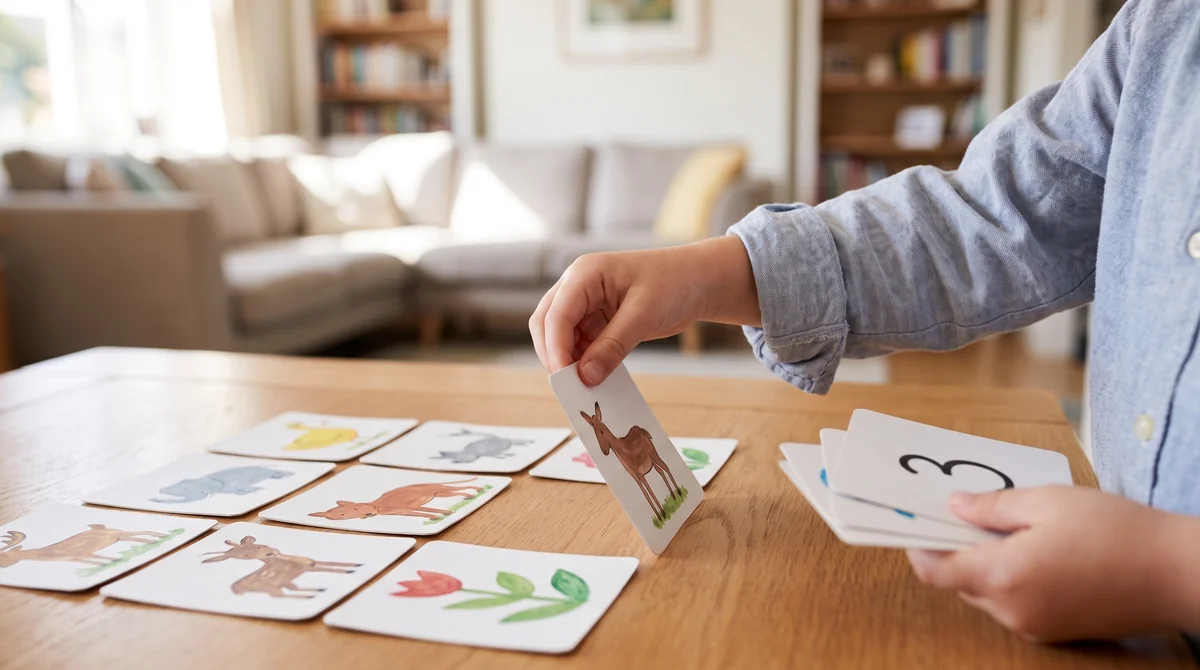
Skill: addition, memory, strategy
A card game where players wake up sleeping queens (one of them is the Pancake Queen) and steal them with knights. You can get rid of number cards by laying down a simple addition equation, like 2 + 3 = 5, so kids go hunting for sums on every turn. It was invented by a 6-year-old, which kids love to hear. Gamewright rates it 8+; younger players can team up with an adult.
Teacher tip: For kids still building addition fluency, keep a short number line on the table. Nobody has to struggle in silence.
Check Sleeping Queens on Amazon
7. Rush Hour
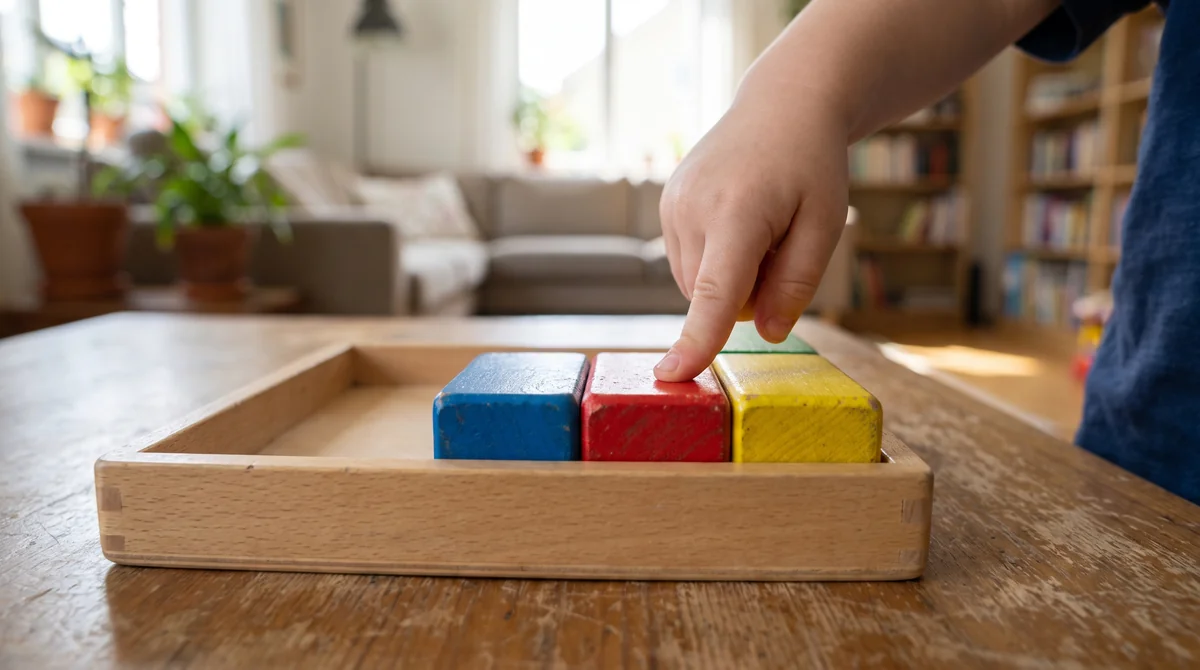
Skill: logic, planning several moves ahead
Rush Hour is a single-player sliding puzzle: set up the traffic jam from a challenge card, then slide cars and trucks until the red car can drive out. There are 40 challenges, from beginner to expert, so kids can move to harder cards at their own pace. It is great for the child who finishes a game early and wanders off.
Teacher tip: Ask kids to say the plan before they touch a piece. “First the blue truck, then the green car” is the planning skill made visible.
8. Gravity Maze
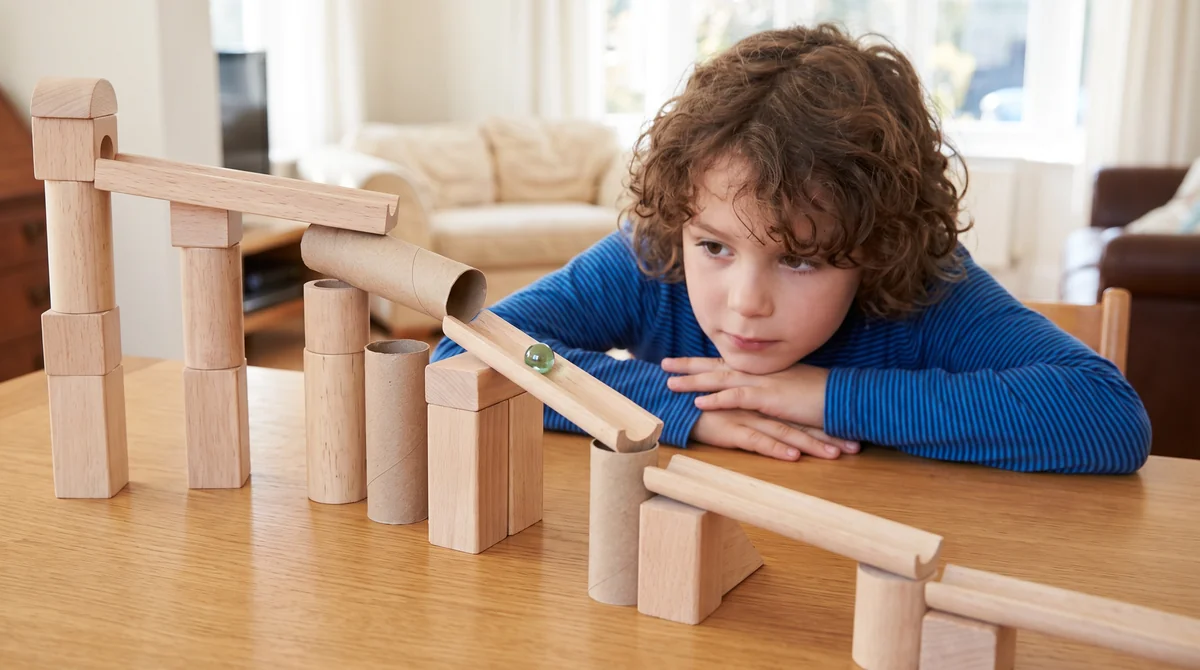
Skill: spatial reasoning, testing ideas
Another solo puzzle, this time with a marble run. Each of the 60 challenge cards shows a start, a target and a few towers already placed. Kids add the remaining towers so the marble drops all the way to the target. The test is immediate: drop the marble and watch.
Teacher tip: When a build fails, ask “Where did the marble stop?” before they rebuild. Finding the exact problem is half of engineering.
9. Your own house rules
The ninth pick is free. Take any game you already own and change one rule: double the scores, play cooperatively, or let the youngest player choose a “wild card” rule. Kids who invent rules start thinking about why games work, which is the same thinking behind good game design.
Making game night a learning habit
- Pick a regular night. Same day each week, short enough to end before anyone gets tired.
- Rotate who chooses. Kids buy in when they get a turn to pick the game.
- Keep a family scorebook. A cheap notebook with dates and scores turns into a record kids love to flip through, and it is real data to compare.
- Talk about one move. After the game, ask “What was your best move?” Thirty seconds of reflection does more than a long lecture.
If you’re shopping for the holidays, several of these games also show up in my Holiday STEM Gift Guide Under $25 and Stocking Stuffers That Sneak in Learning. For more hands-on picks without screens, see 10 Screen-Free STEM Toys That Actually Teach Something.
Frequently asked questions
What is the best educational board game for a 4-year-old? Robot Turtles is a strong first choice, because an adult handles the tricky parts and the child makes all the decisions. Outfoxed! is a good second game once they turn 5.
Are cooperative games good for kids who hate losing? Yes. In Outfoxed! and Robot Turtles the whole table wins or loses together, so kids can practice the game’s skills without the sting of losing to a sibling.
Can these games work in a classroom? Yes. Story Cubes, Rush Hour and Gravity Maze work well as early-finisher stations, and Qwirkle or Blokus fits a small group of four.
How long should family game night last? For kids under 8, 20 to 30 minutes is plenty. Stop while everyone still wants one more round, and they will ask for it next week.
The bottom line
The best educational board game is the one your kids pull off the shelf without being asked. Start with one game that fits your youngest player, play it a few weeks in a row, and add a new one when the old one gets easy.
Looking for more gift ideas? See Best STEM Gifts by Age and Last-Minute Educational Gifts.
More in STEM & Learning
keep reading
Kinetic Sand Sets for Kids: A Teacher's Gift Guide for Small Spaces (Ages 3–8)
Kinetic sand sets for kids ages 3 to 8, picked with a teacher's eye: tray sets for small homes, tool and mold add-ons, and simple ways to turn sand play into early math and letters.

Science Kits for Kids: A Teacher's Guide to Picking One That Gets Used (Ages 5–12)
Science kits for kids ages 5 to 12, chosen with a teacher's checklist: chemistry kits, crystal kits and circuit kits, plus how to make the first experiment stick.

Outdoor and Nature Gifts for Kids: A Teacher's Holiday List for Little Explorers (Ages 4–12)
Outdoor and nature gifts for kids ages 4 to 12, picked by a teacher: binoculars, bug kits, field guides and rock kits, plus a Black Friday shopping plan.